Case Study 1: Nomadsinprogress.com

Industry: Digital Nomad Lifestyle / Travel Blog / Remote Work
Project Goal: Build community and establish organic visibility for affiliate marketing (long-term)
Timeline: 1 Year
Tools Used: Semrush, Google Search Console, Screaming Frog, ChatGPT
Team: Solo project
The Challenge
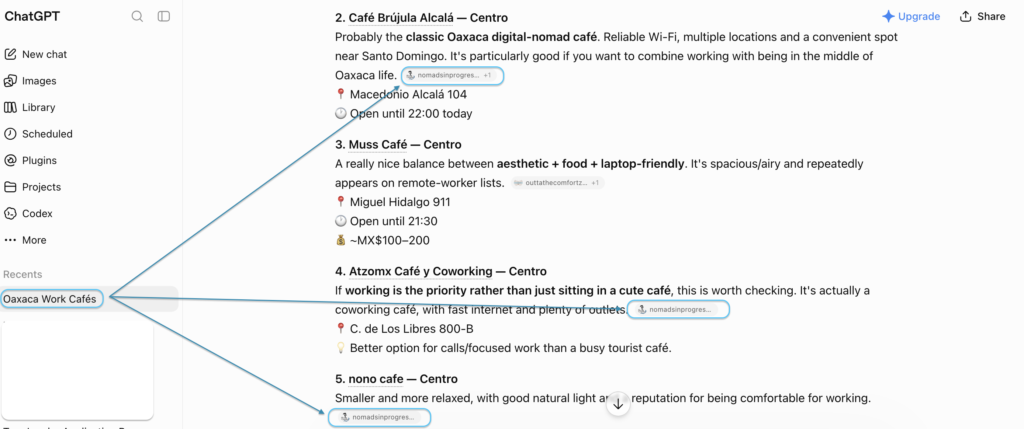
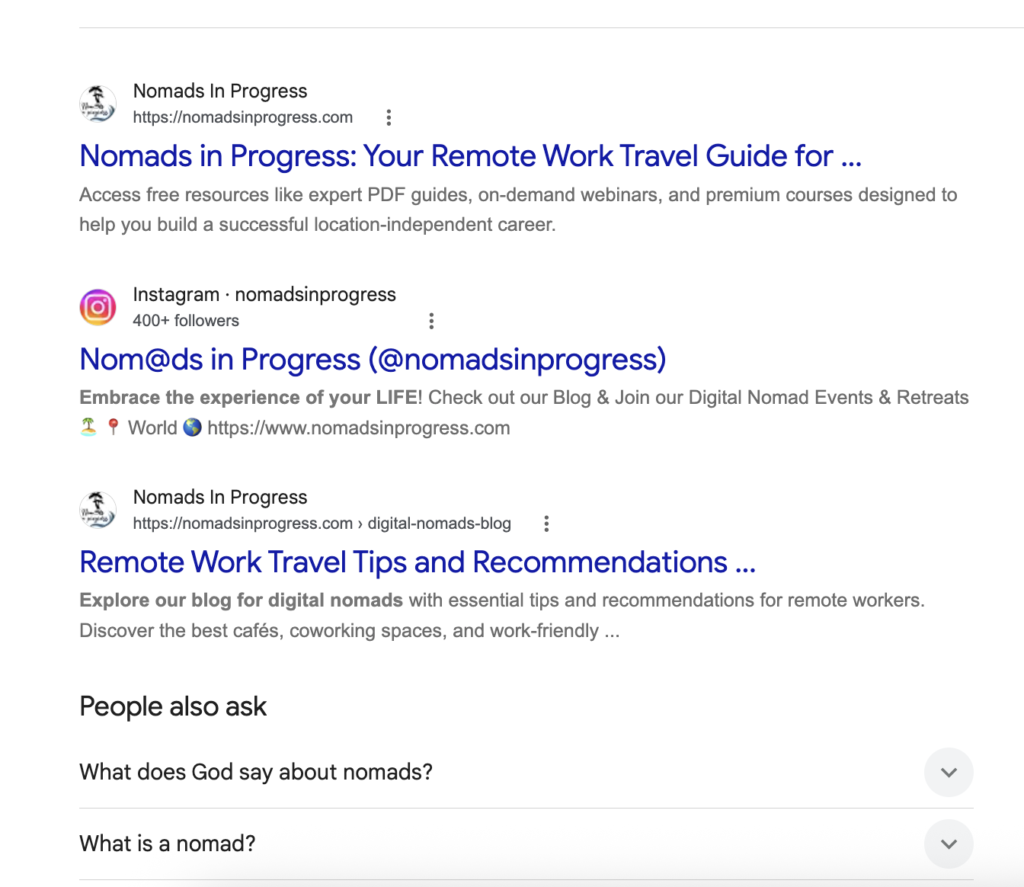
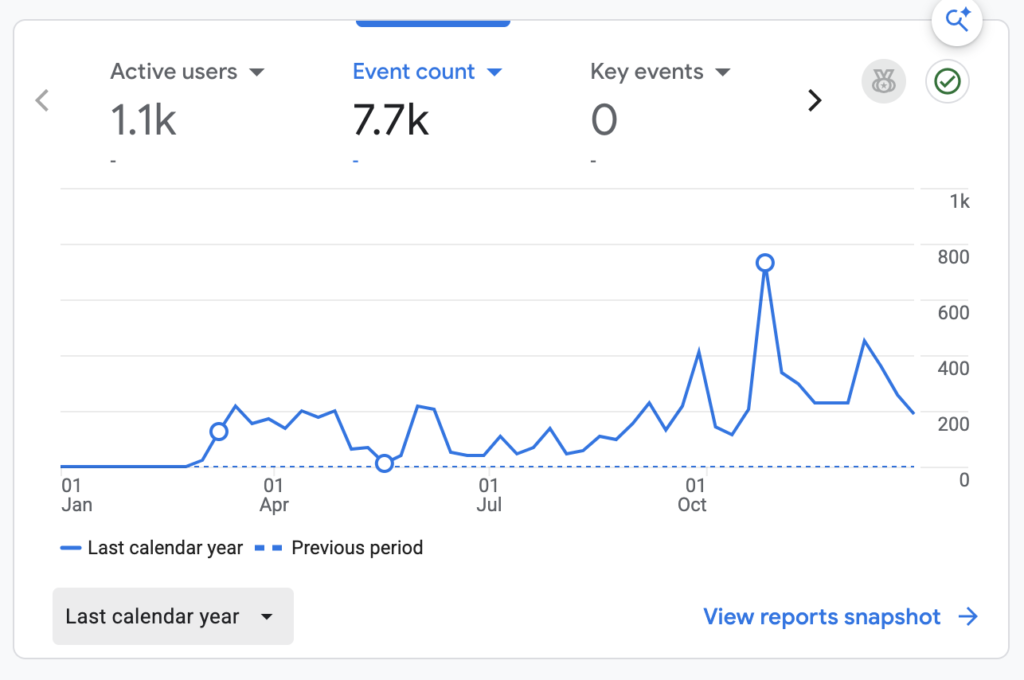
Nomadsinprogress.com launched as a new blog with zero existing audience. The challenge was: generate organic traffic from scratch and establish visibility in AI platforms like ChatGPT and Perplexity, all while competing against established travel blogs with years of domain authority.
With no backlink profile and minimal brand recognition, we needed to build a foundation that would deliver sustainable growth.
The Strategy
The approach combined geographic content targeting, traditional SEO, and forward-looking GEO:
- Geographic Content Strategy: Researched popular digital nomad destinations and cities hosting high-attendance events. Every article was strategically written around specific locations where the target audience gathers, ensuring relevance and timeliness.
- Keyword Research: Targeted geo-optimized keywords tailored to each article’s focus city (e.g., “best coworking spaces in Bali,” “digital nomad events in Lisbon 2025”)
- On-Page Optimization: Restructured meta titles, headers, and content architecture to improve crawlability and relevance
- Technical SEO: Optimized site speed, mobile responsiveness, and implemented schema markup
- GEO Optimization: Restructured content to directly answer natural language queries, making the site AI-friendly and FAQ-rich
Content Focus: Created pillar content around cafés, coworking spaces, and events in specific cities that were chosen based on:
- Popularity within the digital nomad community
- Upcoming conferences and gatherings
- Seasonal trends (e.g., “where to spend winter as a digital nomad”)
Keyword Strategy (Examples)
| Keyword Type | Example |
|---|---|
| City + Activity | “Best cafés to work from in Lisbon” |
| Event-Based | “Digital nomad events in Bali 2025” |
| Comparison | “Medellín vs. Mexico City for remote work” |
| Practical | “Coworking spaces with high-speed internet in Chiang Mai” |
| Seasonal | “Where to go in Europe as a digital nomad in summer” |
Execution
- Researched 20+ cities with active digital nomad communities and upcoming events
- Created a content calendar aligned with event schedules and seasonal migration patterns
- Conducted a full content audit and restructured articles into location-based topic clusters
- Optimized 25+ articles with conversational, geo-specific keywords
- Added FAQ schema to all city guides to capture featured snippets and AI citations
- Published consistently over 12 months to build authority gradually
Results
| Metric | Result |
|---|---|
| Organic Traffic Growth | 150+ sessions/month (from zero) |
| Keyword Rankings (Top 10) | 12 keywords ranking in top 10 positions |
| Featured Snippets Won | 3 snippets (primarily location-based queries) |
| AI Citations | 4 mentions across ChatGPT and Perplexity |
| Articles Optimized | 25+ |
| Backlinks Acquired | 8 quality backlinks |
Key Takeaway
Always do your homeworks “Know your customer, and know where they go.” Adapting content to specific geographic locations and aligning it with real-world events was the critical success factor. By understanding exactly where and when the digital nomad community gathers, we created content that resonated at the right time and place, building not just traffic, but a recognizable presence in the nomadic ecosystem.
Case Study 2: techhunters.org

Industry: Tech Recruitment / IT Staffing
Project Goal: Generate client leads (companies hiring tech talent)
Timeline: 2 Months
Tools Used: Semrush, Ahrefs, Google Search Console, ChatGPT, SurferSEO
Team: Solo project
The Challenge
techhunters.org launched as a new recruitment platform with zero organic presence. The challenge was to build visibility from scratch and attract companies looking to hire tech talent, not job seekers. In a highly competitive B2B recruitment space, we needed to establish credibility quickly and start generating qualified employer leads.
With limited content and no domain authority, we focused on capturing high-intent B2B search traffic and AI visibility within a short timeframe.
The Strategy
The strategy combined targeted B2B SEO with GEO to attract decision-makers and HR professionals:
- Keyword Research: Targeted high-intent keywords used by employers searching for recruitment services (e.g., “hire developers,” “tech recruitment agency,” “IT staffing solutions”)
- On-Page Optimization: Optimized service pages and landing pages for maximum visibility to business audiences
- Content Creation: Published employer-focused resources (e.g., hiring guides, salary benchmarks, employer branding tips)
- Technical SEO: Improved site structure and implemented job posting schema to enhance visibility
- GEO Optimization: Created FAQ content addressing common employer questions to secure AI citations (e.g., “How to hire remote developers,” “What is a tech recruitment agency”)
Keyword Strategy (Examples)
| Keyword Type | Example |
|---|---|
| Service-Based | “Tech recruitment agency Lisbon” |
| Employer-Focused | “Hire senior developers fast” |
| Problem-Oriented | “Where to find software engineers for hire” |
| Industry-Specific | “AI recruitment services” |
| Location-Based | “IT staffing solutions in Portugal” |
Execution
- Conducted comprehensive keyword research focused on employer intent (not candidate queries)
- Optimized meta tags, headers, and service pages for B2B decision-makers
- Implemented FAQ schema to capture AI-driven answers to employer questions
- Developed employer-focused content: “How to Hire Tech Talent in 2025,” “Tech Salary Benchmarks by Role,” “Employer Branding for Tech Companies”
- Secured quality backlinks through partnerships with tech communities and business directories
- Published consistent content over a 2-month sprint
Results
| Metric | Result |
|---|---|
| Organic Traffic Growth | 30+ visits/month (from zero) |
| Keyword Rankings (Top 10) | 18 keywords ranking in top 10 positions |
| Featured Snippets | 2 won for employer-focused queries |
| AI Citations | 5 mentions across ChatGPT and Perplexity for recruitment-related queries |
| Lead Form Submissions | 1 real client lead/month (from zero) |
| Pages Optimized | 15+ |
Key Takeaway
“Know who you’re speaking to, and speak only to them.” By strictly targeting employers rather than job seekers, we avoided wasting resources on low-intent traffic. Every piece of content, every keyword, and every optimization decision was made with the B2B decision-maker in mind. In just two months, a disciplined approach to employer-focused SEO and GEO generated real, qualified leads, proving that specificity beats volume in B2B marketing.